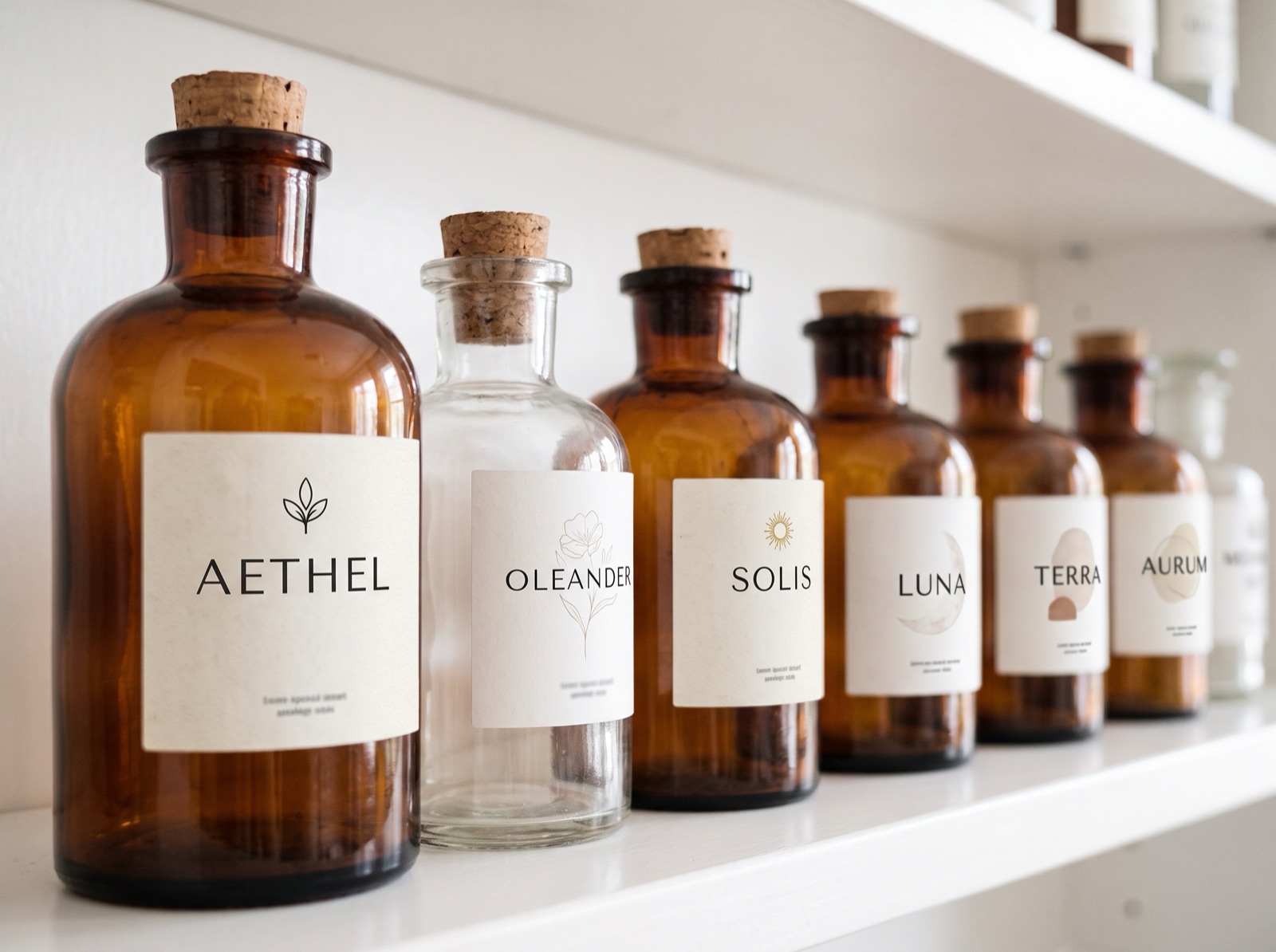
Guía mejor para · Nº 10
Mejor etiqueta para botellas de aceite esencial y de gotero
Para botellas de aceite esencial, de gotero y de aromaterapia, la mejor etiqueta es una cara de película resistente a solventes — PET o un vinilo químicamente inerte — con un adhesivo resistente a solventes.Los aceites esenciales y los compuestos aromáticos son agresivos: penetran en los materiales de papel y disuelven los adhesivos estándar. En pequeñas botellas de gotero ámbar, utiliza una película delgada y conformable para que envuelva la curva sin despegarse.
La versión corta
Si este eres tú, elige eso.
SIla botella contiene un aceite esencial puro (no diluido),→elige película de PET con un adhesivo resistente a solventes — nada menos sobrevive al contacto.
SIla botella es pequeña o tiene una curva pronunciada (gotero de 10 ml),→elige un vinilo delgado y químicamente inerte para que la etiqueta envuelva el radio sin despegarse.
SIla mezcla está diluida y el costo importa,→el BOPP delgado puede funcionar — pero pruébalo con tu aceite específico primero.
SIte sientes tentado por papel sin recubrimiento,→no lo hagas — los aceites puros penetran las fibras, manchan la cara y degradan el adhesivo.
SIel aceite gotea por el lado de la botella en uso,→prueba toda la construcción con tu formulación real antes de la tirada.
Las opciones, clasificadas
Qué elegir, en orden.
Película de PET + adhesivo resistente a solventes
El estándar duradero — el PET resiste los aceites, solventes y aromáticos que destruyen las etiquetas de papel, se mantiene dimensionalmente estable y permite una impresión nítida para texto pequeño.
Vinilo químicamente inerte
Botellas curvas y de pequeño diámetro: el vinilo se adapta al radio ajustado de una botella gotero sin despegarse, mientras resiste el contacto con el aceite.
BOPP delgado
Tiradas de menor costo y mezclas menos agresivas: el BOPP resiste el agua, el aceite y el desgaste a un costo modesto, pero confirma la resistencia contra tu aceite específico.
Papel sin recubrimiento
No apto para aceites esenciales puros: los aceites permeabilizan el papel, se filtran a lo largo de las fibras y manchan, degradando el adhesivo debajo.
Cómo decidir
Los factores que realmente importan.
Los aceites esenciales atacan las etiquetas ordinarias
Los aceites esenciales, compuestos aromáticos y muchos disolventes son agresivos: permeabilizan los materiales de papel y degradan los adhesivos estándar al plastificar o disolver el polímero adhesivo. La solución es un material frontal de película resistente a disolventes (típicamente PET o un vinilo químicamente inerte) combinado con un adhesivo resistente a disolventes.
Las curvas pequeñas necesitan una película delgada y conformable
Una botella gotero ámbar de 10 ml tiene un radio ajustado. Un material frontal rígido se levanta en los bordes perpendiculares a la curva, así que reduce el grosor: una película delgada envuelve la curva y se mantiene en su lugar. El vidrio ámbar y transparente tiene alta energía superficial, por lo que la adhesión en sí es fácil; la conformabilidad y la resistencia química son las verdaderas limitaciones.
La resistencia varía según el aceite — así que prueba
La resistencia a disolventes varía significativamente según la composición y concentración del aceite: un aceite esencial puro es mucho más agresivo que una mezcla de portador diluida. Prueba la construcción real de tu etiqueta contra tu formulación real, incluyendo goteos por el lado de la botella, antes de comprometerte a una tirada.
Preguntas comunes
Respondidas directamente.
¿Por qué mis etiquetas de aceite esencial se manchan, arrugan o se caen?
Porque el aceite está atacando la etiqueta. Los aceites esenciales penetran en los materiales frontales de papel y disuelven los adhesivos estándar. Cambia a un material frontal de película resistente a solventes (PET o vinilo químicamente inerte) con un adhesivo resistente a solventes.
¿Qué material para etiquetas es a prueba de aceite para botellas gotero?
Película de PET o un vinilo químicamente inerte, combinado con un adhesivo resistente a solventes. En botellas gotero pequeñas, utiliza un grado delgado y conformable para que se ajuste a la curva. Siempre prueba con tu aceite específico, ya que la resistencia varía según la composición y la concentración.
¿Puedo usar etiquetas de papel para aceites esenciales?
No para aceites puros: penetran y se filtran a través del papel y lo manchan, y degradan el adhesivo. El papel solo funciona para mezclas bien diluidas y de bajo aroma, y aun así, un laminado ayuda.
Veredicto del editor
Trata los aceites esenciales como un problema de resistencia química, no como uno cosmético: un film de PET o vinilo inerte con un adhesivo resistente a solventes, lo suficientemente delgado como para envolver una pequeña botella gotero. El papel es la herramienta equivocada aquí. Dinos el aceite (puro o diluido) y el tamaño de la botella, y emparejaremos una construcción y la probaremos.
Sigue leyendo
¿Aún decidiendo?
Pruébalo gratis.
Enviamos una muestra a tu superficie, tu clima — en 3–5 días. Decide con el material en mano.
Hechos sobre materiales verificados por
Kevin— cofundador, materiales y fabricación, Guangzhou. Cada afirmación se basa en el conocimiento de la planta de producción.Acerca de Euphora →