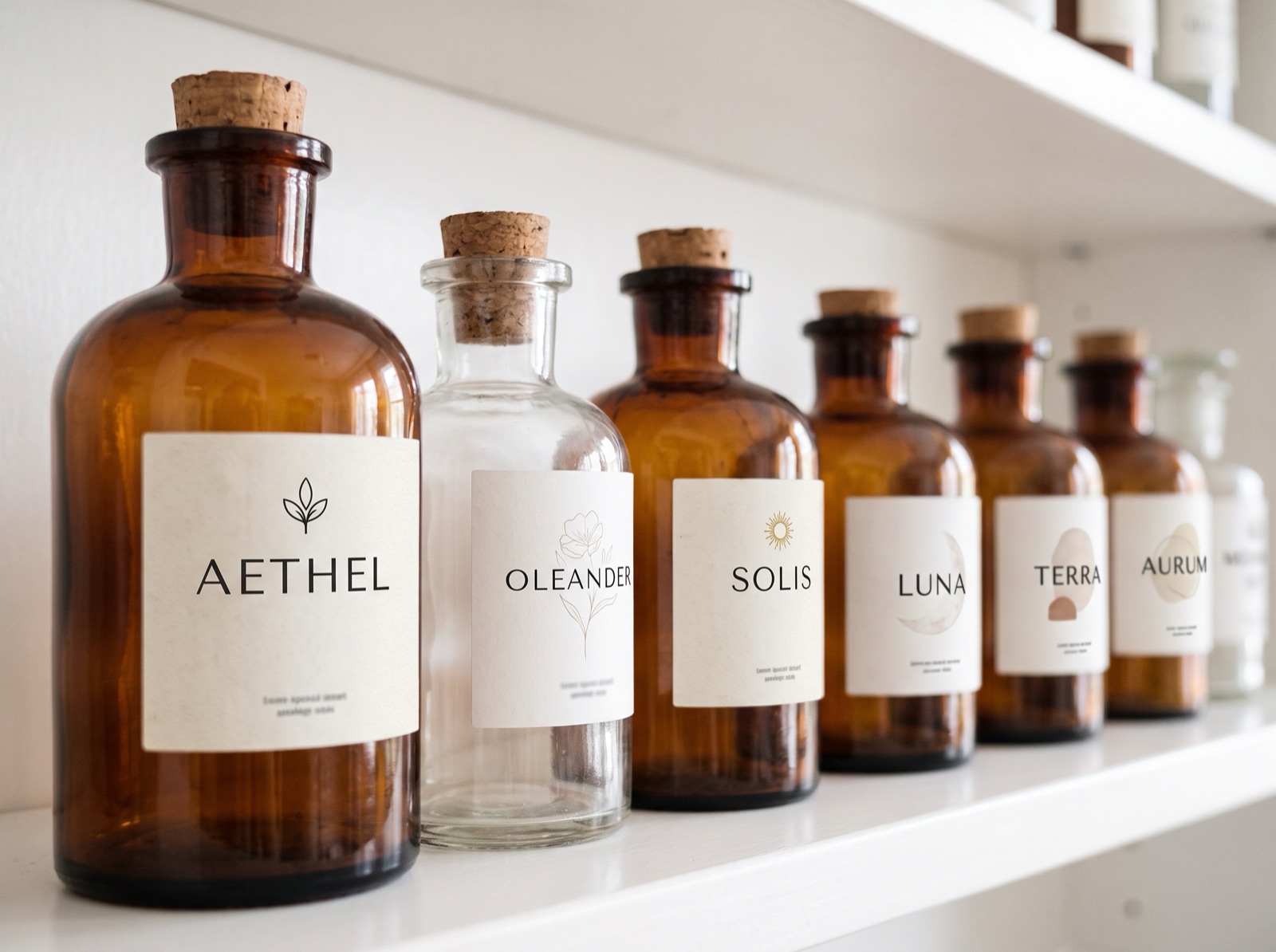
Guia melhor para · Nº 10
Melhor rótulo para frascos de óleo essencial e conta-gotas
Para frascos de óleo essencial, conta-gotas e aromaterapia, o melhor rótulo é um filme frontal resistente a solventes — PET ou um vinil quimicamente inerte — com um adesivo resistente a solventes.Óleos essenciais e compostos aromáticos são agressivos: eles permeiam materiais de papel e dissolvem adesivos padrão. Em pequenos frascos de conta-gotas âmbar, use um filme fino e conformável para que ele envolva a curva sem levantar.
A versão curta
Se este é o seu caso, escolha isso.
SEo frasco contém um óleo essencial puro (não diluído),→escolha filme PET com adesivo resistente a solventes — nada menos sobrevive ao contato.
SEo frasco é pequeno ou tem uma curva acentuada (frasco de 10 ml),→escolha um vinil fino e quimicamente inerte para que o rótulo envolva o raio sem levantar.
SEa mistura está diluída e o custo importa,→um BOPP fino pode funcionar — mas teste-o com seu óleo específico primeiro.
SEvocê está tentado por papel não revestido,→não faça isso — óleos puros permeiam as fibras, mancham a face e degradam o adesivo.
SEo óleo escorre pela lateral do frasco durante o uso,→teste toda a construção com sua formulação real antes da tiragem.
As opções, classificadas
O que escolher, em ordem.
Filme PET + adesivo resistente a solventes
O padrão durável — o PET resiste aos óleos, solventes e aromáticos que destroem rótulos de papel, mantém a estabilidade dimensional e aceita uma impressão nítida para tipos pequenos.
Vinil quimicamente inerte
Frascos curvados e de pequeno diâmetro — o vinil se adapta ao raio apertado de um frasco conta-gotas sem descolar, enquanto ainda resiste ao contato com óleo.
BOPP fino
Tiragens de menor custo e misturas menos agressivas — o BOPP resiste à água, óleo e arranhões a um custo modesto, mas confirme a resistência contra seu óleo específico.
Papel não revestido
Não é adequado para óleos essenciais puros — os óleos permeiam o papel, se espalham pelas fibras e mancham, degradando o adesivo por baixo.
Como decidir
Os fatores que realmente importam.
Óleos essenciais atacam rótulos comuns
Óleos essenciais, compostos aromáticos e muitos solventes são agressivos — eles permeiam os materiais de papel e degradam adesivos padrão ao plastificar ou dissolver o polímero adesivo. A solução é um material frontal resistente a solventes (tipicamente PET ou um vinil quimicamente inerte) combinado com um adesivo resistente a solventes.
Curvas pequenas precisam de um filme fino e conformável
Um frasco conta-gotas âmbar de 10 ml tem um raio apertado. Um material frontal rígido se levanta nas bordas perpendiculares à curva, então reduza a espessura — um filme fino envolve a curva e permanece no lugar. O vidro âmbar e transparente tem alta energia superficial, então a adesão em si é fácil; a conformabilidade e a resistência química são as verdadeiras limitações.
A resistência varia por óleo — então teste
A resistência a solventes varia significativamente pela composição e concentração do óleo: um óleo essencial puro é muito mais agressivo do que uma mistura de óleo transportador diluído. Teste a construção real do seu rótulo contra sua formulação real, incluindo gotejamentos ao longo do lado do frasco, antes de se comprometer com uma tiragem.
Perguntas comuns
Respondidas diretamente.
Por que meus rótulos de óleo essencial borram, enrugam ou caem?
Porque o óleo está atacando o rótulo. Óleos essenciais permeiam materiais de papel e dissolvem adesivos padrão. Mude para um material frontal de filme resistente a solventes (PET ou vinil quimicamente inerte) com um adesivo resistente a solventes.
Qual material para rótulos é à prova de óleo para frascos conta-gotas?
Filme PET ou um vinil quimicamente inerte, combinado com um adesivo resistente a solventes. Em frascos conta-gotas pequenos, use uma gramatura fina e conformável para que se ajuste à curva. Sempre teste com seu óleo específico, pois a resistência varia de acordo com a composição e a concentração.
Posso usar rótulos de papel para óleos essenciais?
Não para óleos puros — eles permeiam e se infiltram pelo papel, manchando-o e degradando o adesivo. O papel só funciona para misturas bem diluídas e de baixa aromaticidade, e mesmo assim um laminado ajuda.
Veredicto do editor
Trate os óleos essenciais como um problema de resistência química, não como um cosmético: um filme PET ou de vinil inerte com um adesivo resistente a solventes, fino o suficiente para envolver um pequeno frasco conta-gotas. O papel é a ferramenta errada aqui. Diga-nos o óleo (puro ou diluído) e o tamanho do frasco, e nós iremos sugerir uma construção e testá-la.
Continue lendo
Ainda decidindo?
Peça uma amostra grátis.
Enviamos uma amostra para sua superfície, seu clima — em 3–5 dias. Decida com o material em mãos.
Fatos sobre materiais verificados por
Kevin— co-fundador, materiais e fabricação, Guangzhou. Cada afirmação remete ao conhecimento da linha de produção.Sobre a Euphora →