Guide meilleur pour · Nº 01
Meilleure étiquette pour bouteilles en plastique
Pour la plupart des bouteilles en plastique, la meilleure étiquette est une frontal d'étiquette BOPP ou PET transparent ou blanc associé à un adhésif haute-tack à faible énergie de surface (LSE).La raison en est l'énergie de surface : les plastiques courants des bouteilles sont difficiles à coller — le HDPE se situe autour de ~31 dyne/cm et le polypropylène à ~29, tous deux en dessous du seuil de ~36 où un adhésif standard peut correctement mouiller et coller. Spécifiez un acrylique de qualité LSE (ou, pour des tirages intérieurs courts, un adhésif en caoutchouc) et l'étiquette reste en place ; utilisez un adhésif permanent générique et elle se soulève aux bords.
La version courte
Si c'est votre cas, choisissez cela.
SIvotre bouteille est en HDPE ou en polypropylène (bouteilles de shampoing, bouteilles souples et la plupart des bouteilles cosmétiques),→choisissez un BOPP transparent ou blanc avec un adhésif acrylique haute-tack LSE.
SIla bouteille est exposée à des produits chimiques, des solvants ou de la chaleur,→choisissez un film PET avec un acrylique LSE.
SIl'étiquette est à court terme et en intérieur et le budget compte,→un adhésif haute-tack à base de caoutchouc est acceptable — mais jamais en extérieur.
SIla bouteille est comprimée lors de l'utilisation,→choisissez un frontal d'étiquette en film flexible (BOPP ou vinyle), jamais un matériau rigide.
SIles étiquettes se soulèvent encore en volume de production,→traitez les bouteilles par corona ou plasma pour augmenter l'énergie de surface à ~44–50 dyne/cm.
Les options, classées
Que choisir, dans l'ordre.
BOPP transparent/blanc + acrylique haute-tack LSE
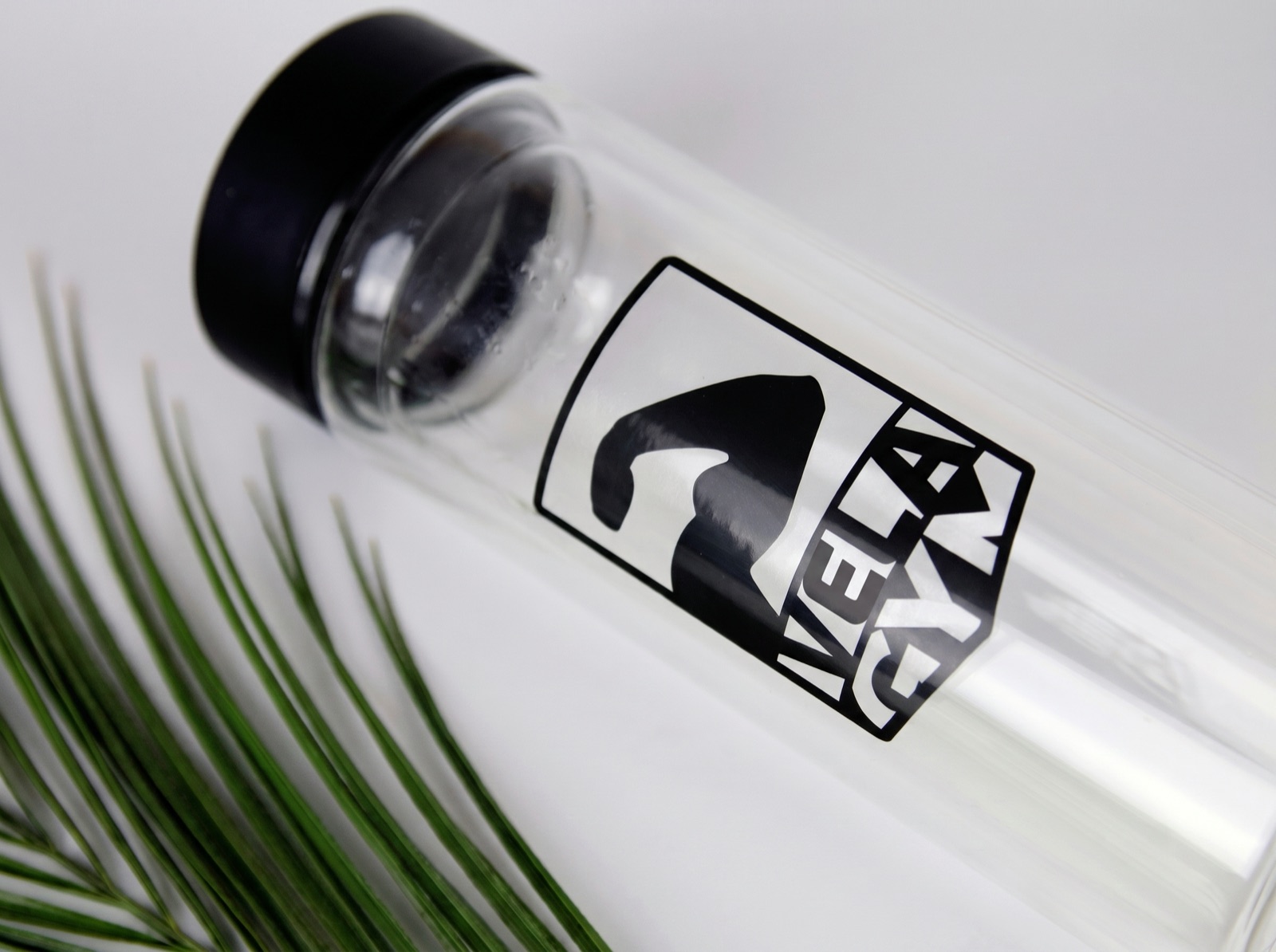
Le choix par défaut pour les bouteilles cosmétiques, de boissons et de soins corporels — le look « sans étiquette » transparent, entièrement résistant à l'eau, sûr au contact des aliments à l'extérieur, avec un adhésif formulé pour adhérer aux plastiques à faible énergie.
Film PET + acrylique LSE
Lorsque la bouteille est exposée à des produits chimiques, des solvants ou à la chaleur — le PET est le film le plus durable et dimensionnellement stable (environ −40 °C à +150 °C). Plus rigide, donc moins idéal pour les bouteilles souples.
Adhésif à base de caoutchouc à forte adhérence
Utilisation à court terme ou en intérieur où le coût est important — le caoutchouc adhère bien aux plastiques à faible énergie, mais résiste mal aux UV et à la chaleur (généralement moins de 1 à 2 ans), donc il n'est pas adapté pour une utilisation extérieure ou de longue durée.
Traitement corona / plasma ou un apprêt
Ce n'est pas un matériau mais une solution — traiter la bouteille augmente son énergie de surface à ~44–50 dyne/cm afin qu'un adhésif normal puisse adhérer. Utile en volume ; les plastiques recyclés ou inconnus ont une énergie de surface instable et nécessitent des tests par lot.
Comment décider
Les facteurs qui comptent vraiment.
L'énergie de surface est la clé
L'énergie de surface (mesurée en dyne/cm) détermine si un adhésif peut mouiller une surface et adhérer. Environ 40 dyne/cm sépare les surfaces à faible énergie de celles à haute énergie. Les plastiques typiques des bouteilles se situent à un niveau bas — PVC 39, PET 36, HDPE 31, polypropylène 29 — et en dessous de ~36, un adhésif sensible à la pression standard mouille à peine la surface, ce qui fait que les étiquettes se décollent et tombent. C'est cela, et non un « mauvais adhésif », qui est la cause habituelle d'une étiquette qui se décolle au niveau de l'épaule d'une bouteille de shampoing.
Caoutchouc vs acrylique — le choix d'adhésif principal
L'adhésif à base de caoutchouc a une forte adhérence et adhère bien aux plastiques à faible énergie, mais vieillit mal sous les UV et la chaleur — généralement moins de 1 à 2 ans en extérieur. L'acrylique résiste mieux aux UV, aux produits chimiques et à la chaleur avec un vieillissement bien meilleur (3 à 10 ans en extérieur) mais a généralement une adhérence inférieure et nécessite une formule spéciale pour maintenir les plastiques de type polypropylène. Règle générale : l'utilisation à court terme/intérieur peut utiliser du caoutchouc ; l'extérieur, le long terme ou l'exposition chimique doivent utiliser un acrylique de qualité LSE.
Les bouteilles souples ont besoin d'un film qui se plie
Un frontal d'étiquette rigide se fissure ou se soulève lorsque la bouteille est pressée. Le BOPP transparent et le vinyle PVC s'adaptent tous deux aux cylindres et aux courbes douces sans se soulever au niveau de la couture, c'est pourquoi le BOPP est la norme pour l'apparence premium sans étiquette. Pour une épaule courbée prononcée, le vinyle se plie encore plus facilement que le BOPP.
Questions fréquentes
Réponses directes.
Pourquoi mes étiquettes se décollent-elles des bouteilles en plastique ?
C'est presque toujours une question d'énergie de surface. Le HDPE (~31 dyne/cm) et le polypropylène (~29) sont en dessous du seuil de ~36 qu'un adhésif standard nécessite pour adhérer, donc l'étiquette ne mouille jamais complètement la surface et se soulève aux bords. Optez pour un adhésif à haute adhérence et faible énergie de surface, ou traitez la bouteille par corona pour augmenter son énergie de surface à ~44–50.
Quel adhésif fonctionne sur le HDPE et le polypropylène ?
Un grade à faible énergie de surface (LSE) — soit un adhésif acrylique à haute adhérence formulé pour les plastiques LSE (meilleur pour la durabilité et les UV) ou un adhésif à base de caoutchouc (meilleure adhérence initiale, mais uniquement pour un usage intérieur à court terme). Un acrylique permanent générique ne suffit pas à lui seul.
Puis-je obtenir l'apparence « sans étiquette » sur une bouteille en plastique ?
Oui — un film BOPP transparent avec un adhésif LSE donne l'apparence sans étiquette et s'adapte à la bouteille sans se soulever. C'est le choix premium standard pour les marques de cosmétiques et de boissons.
Verdict de l'éditeur
Il n'y a pas de réponse universelle, mais pour la grande majorité des bouteilles en plastique, un frontal BOPP transparent avec un adhésif acrylique à faible énergie de surface est le bon choix — résistant à l'eau, d'apparence premium, et formulé pour les plastiques exacts qui contrecarrent la colle ordinaire. Dites-nous la résine (HDPE, PP, PET) et si la bouteille est compressée, et nous adapterons l'adhésif en conséquence.
Continuez à lire
Vous hésitez encore ?
Échantillonnez-le gratuit.
Nous expédions un échantillon à votre surface, votre climat — en 3 à 5 jours. Décidez avec le matériau en main.
Faits sur les matériaux vérifiés par
Kevin— co-fondateur, matériaux et fabrication, Guangzhou. Chaque affirmation est basée sur des connaissances de l'atelier.À propos d'Euphora →