Vergleich · Nr. 02
Holografisches Papier vs. Holografisches Vinyl
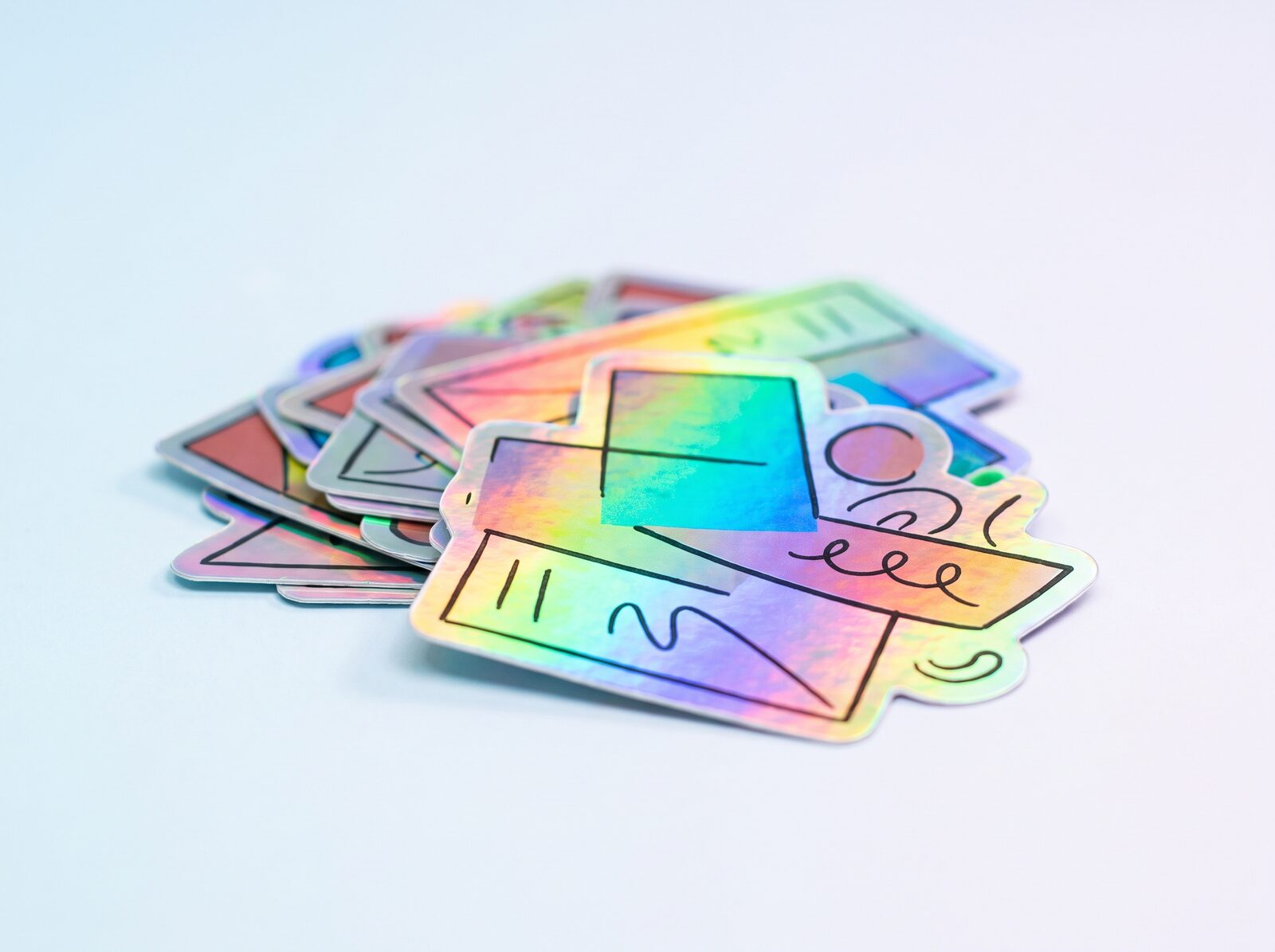
Die beiden am häufigsten nachgefragten Spezialoberflächen für Aufklebergeschäfte. Sie sehen in Marketingfotos oberflächlich identisch aus. In der Hand sind es jedoch völlig unterschiedliche Materialien mit völlig unterschiedlichen idealen Anwendungsbereichen.
Nebeneinander
Die Spezifikationen, gemessen.
★ = klarer Vorteil bei dieser Eigenschaft
Wann welches wählen
Die Entscheidung, je nach Anwendungsfall.
- →Sie sind ein Etsy-Verkäufer, der mit einem Heim-Epson- oder Canon-Inkjet arbeitet.
- →Sie möchten einen weicher, journalfreundlicher Eindruck — Käufer beschreiben es als „nicht plastisch.“
- →Sie schneiden zu Hause mit einem Cricut oder Silhouette und möchten saubere Schnitte ohne Klingenwechsel.
- →Verwendung ist innere Dekoration — Laptop, Journal, Geschenkverpackung.
- →Das Budget pro Blatt ist wichtig, und das Projekt hat eine kurze Lebensdauer (unter 12 Monaten).
- →Sie sind eine Druckerei oder DTC-Marke mit Eco-Solvent-, UV- oder Latexdruckern.
- →Die Anwendung ist für den Außenbereich oder langlebig — Fensterdekore, gebrandete Verpackungen, die lange halten sollen.
- →Sie benötigen den möglichst scharfen holografischen Effekt — das Kunststoffsubstrat hält den prismatischen Glanz klarer als beschichtetes Papier.
- →Die Oberfläche wird häufig mit Wasser in Kontakt kommen — Getränkeflaschen, Außenbeschilderungen.
Häufige Fragen
Direkt beantwortet.
Welches holografische Etikett hält im Freien?
Vinyl – 12–36 Monate im Freien im Vergleich zu 3–6 Monaten für beschichtetes holografisches Papier. Verwenden Sie holografisches Vinyl für Fensteraufkleber, Getränkeflaschen und Außenbeschilderung; Papier ist für die Innendekoration gedacht.
Kann ich holografisches Papier mit einem Heim-Tintenstrahldrucker bedrucken?
Ja – beschichtetes holografisches Papier lässt sich mit Heim-Tintenstrahldruckern und Laserdruckern bedrucken und wird sauber auf einem Cricut oder Silhouette gestanzt. Holografisches Vinyl benötigt in der Regel einen professionellen Eco-Solvent-, UV- oder Latexdrucker.
Welches hat den schärferen holografischen Effekt?
Vinyl – das Kunststoffsubstrat hält den prismatischen Glanz klarer. Papier ist wärmer und weicher. Für maximalen Glanz wählen Sie Vinyl; für ein journalfreundliches Gefühl wählen Sie Papier.
Urteil des Redakteurs
Für Etsy und kleine dekorative Arbeiten, gewinnt holografisches Papier in Bezug auf Kosten, Druckerkompatibilität und haptisches Gefühl – es ist die richtige Wahl für die meisten Heimdrucker. Für Außenanwendungen, Getränkeflaschen oder Druckereiproduktionsläufe ist holografisches Vinyl der Upgrade-Weg. Die Regel des Händlers: Papier für die Tagebuchseite, Vinyl für die Wasserflasche. Kaufen Sie beide als Muster – der Unterschied vor Ort entscheidet schneller als jedes Datenblatt.
Druckauflage
Muster beide – und entscheiden Sie.
Wir versenden ein kostenloses Muster beider Materialien nebeneinander innerhalb von 3–5 Tagen. Entscheiden Sie mit Ihrem Drucker, Ihrer Flasche, Ihrem Versandprozess.
Materialfakten verifiziert von
Kevin— Mitgründer, Material & Fertigung, Guangzhou. Jede Aussage basiert auf dem Wissen vom Produktionsboden.Über Euphora →