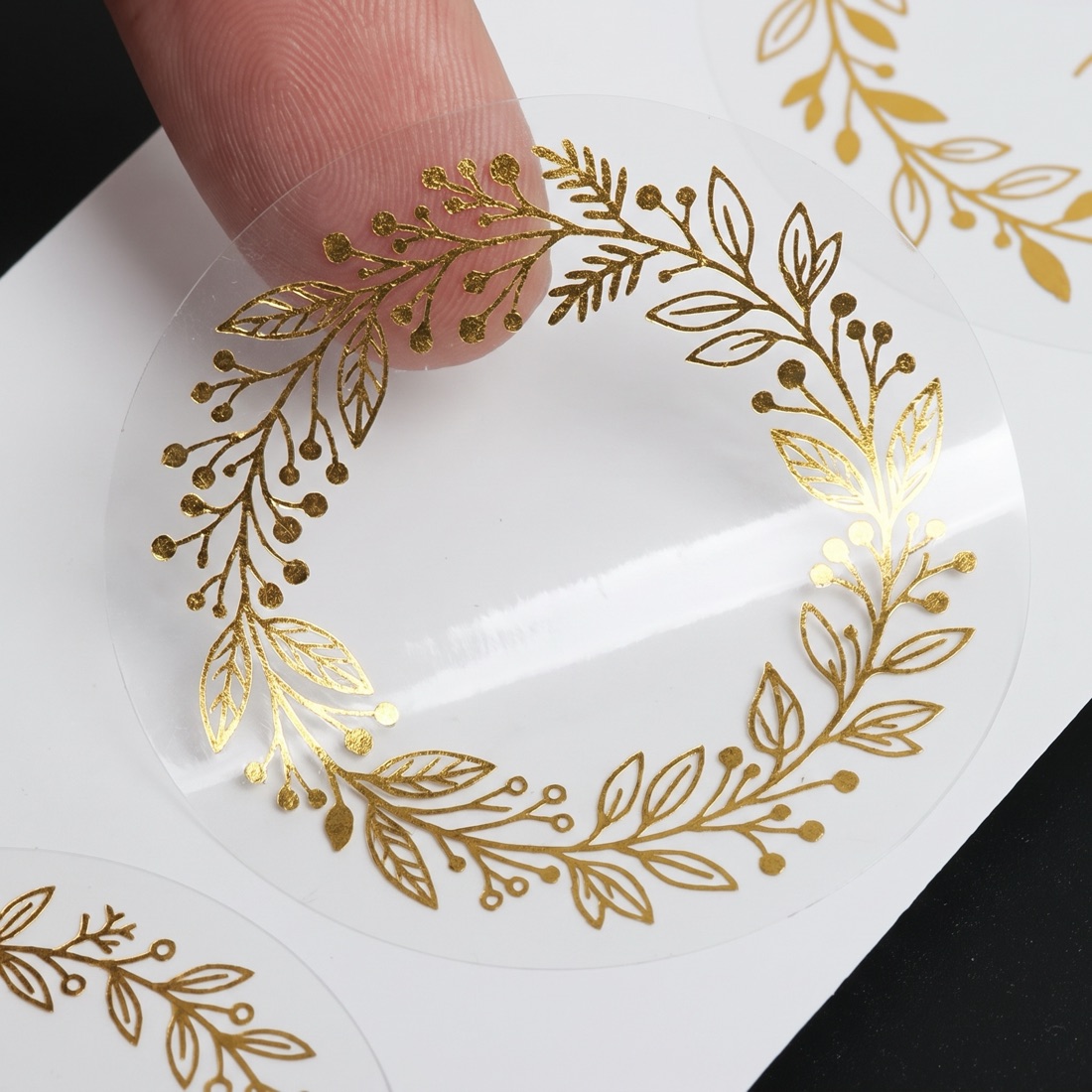
Hot Stamp vs Cold Foil?
Both lay down a metallic shine; one uses a heated die, one uses UV glue at room temperature. The heat decides which substrates are in play and how fine the detail can go.
What it is
Both processes apply a metallic or pigment foil to a label, and the difference is heat. Hot stamping uses a heated die pressed against foil under pressure, producing a vibrant, highly reflective metallic effect. Cold foil transfer uses a UV-curable adhesive to bond foil at room temperature, avoiding heat entirely.
That single distinction — heat or no heat — governs which substrates each can run on and how fine the detail can be.
Substrate compatibility
Hot stamping is compatible with coated paper, PET, and bright-silver BOPP. But the heat disqualifies it from soft PE (which distorts), thermal paper (whose coating would develop false images), and thin textured specialty papers (crushed by die pressure). Even on bright-silver BOPP, excessive temperature causes the film to deform and shrink, so process heat must be carefully managed.
Cold foil carries no substrate temperature constraint — it works on any facestock, which makes it the route for heat-sensitive materials and the safer choice on metallic films where a hot die risks lifting the deposited metal layer.
What each is good for
Hot stamping delivers the most reflective, vivid metallic on premium wine, spirits, and cosmetics — the tactile signal of quality before a bottle is even opened.
Cold foil is preferred for intricate fine-line graphics, hairline rules, and small text, and for any substrate incompatible with heat. It is also a more cost-effective route to inline metallic at scale, applied during printing rather than as a separate stamping pass.
Trade-offs
— what to know
Detail vs punch. Hot stamping struggles with fine text below a few points and thin rules, where die edges bleed; cold foil resolves those cleanly. But cold foil’s UV adhesive layer adds thickness and can slightly soften the sharpness of large solid metallic areas compared with hot stamping.
Foil is a layer in a stack. Stamping over a laminate on metallic BOPP, at too high a temperature, can weaken the bond beneath and transfer the metal layer — validate the actual construction at production speed before bulk, rather than borrowing foil parameters from a different substrate.
Cross-References
Pairs well
with these entries.
Press Run
See the material in person — not in print.
Sample packs ship 3–5 day air, free for qualified buyers. Touch the material before you commit.