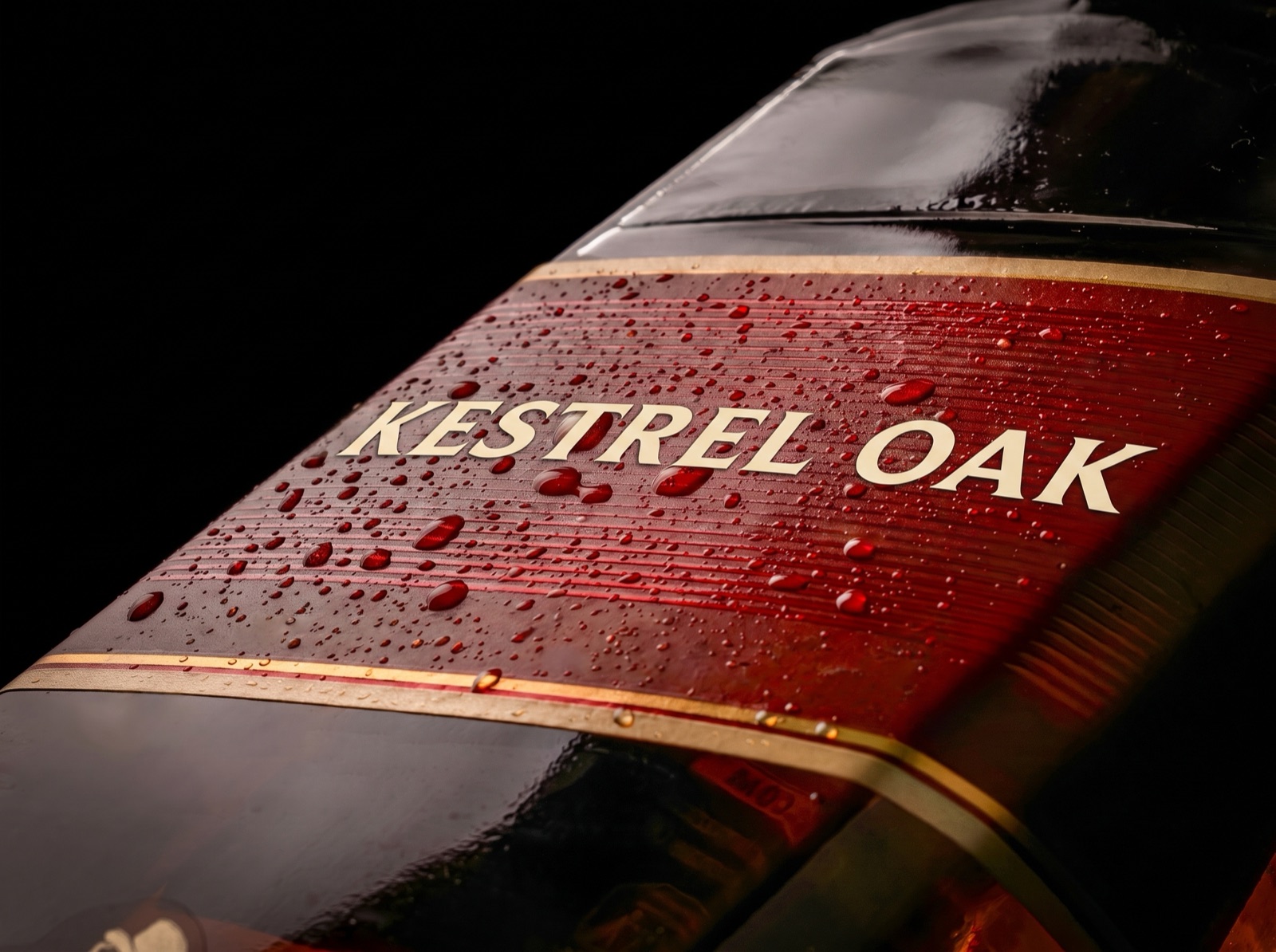
Comment faire · Nº 05
Comment rendre les autocollants résistants à l'eau
Commencez par un frontal résistant à l'eau — vinyle, BOPP ou film PET, pas de papier — ajoutez ensuite un film de protection transparent pour une protection complète. Les autocollants en papier ne peuvent être que résistants aux éclaboussures ; pour une exposition réelle à l'eau, le frontal doit être en plastique. Si vous imprimez l'autocollant vous-même, laissez l'encre sécher environ 24 heures avant de laminer pour éviter les bavures.
« Résistant à l'eau » cache trois travaux différents — une éclaboussure, une immersion et une saison en extérieur — et l'erreur courante est de se tourner vers un spray ou un laminé pour sauver un autocollant en papier qui n'aurait jamais pu survivre. L'étanchéité est une propriété de l'ensemble de la construction : le frontal, l'encre et la finition, dans cet ordre. Presque tout repose sur le frontal.
Vous aurez besoin de
- ▪Frontal en film résistant à l'eau (vinyle / BOPP / PET)
- ▪Film de protection transparent ou feuille de laminage
Étape par étape
- 01
Choisissez un frontal résistant à l'eau
Utilisez du vinyle, du BOPP ou un film PET. Le papier absorbe l'eau, se froisse et laisse l'encre baver — un frontal en film plastique est la base de tout autocollant résistant à l'eau.
- 02
Imprimez avec de l'encre résistante à l'eau
Les encres pigmentées, éco-solvants ou durcies aux UV résistent beaucoup mieux à l'eau que les encres à base de teinture, qui peuvent baver une fois mouillées.
- 03
Ajoutez un film de protection transparent
Un film laminé transparent (ou une feuille de laminage auto-adhésive) sur l'impression ajoute une protection contre l'eau, les éraflures et les UV — c'est la couche extérieure qui subit l'usure.
- 04
Laissez d'abord l'encre sécher
Si vous avez imprimé l'autocollant vous-même, laissez l'encre sécher environ 24 heures avant de laminer pour éviter les bavures sous le film.
- 05
Laminez en douceur
Travaillez sur une surface propre et sans peluches et lissez le laminé du centre vers l'extérieur pour éviter que de l'air ou de la poussière ne soit piégé en dessous.
Pourquoi un autocollant en papier ne peut pas être sauvé
Il est tentant de croire qu'un scellant en spray ou une feuille de laminage transformera un autocollant en papier en un autocollant résistant à l'eau. Ce n'est pas le cas, et la raison en est les bords. L'eau trouve le bord en papier exposé, s'infiltre dans les fibres, et le matériau gonfle et se soulève par en dessous — le laminé au-dessus est intact tandis que l'autocollant échoue en dessous. Un revêtement ralentit une éclaboussure ; il ne stoppe pas une immersion.
Un frontal en film n'a pas de fibres à absorber et pas de bord à échouer. Le vinyle, le BOPP et le PET n'absorbent tout simplement pas l'eau, donc le laminé qui les recouvre est une véritable seconde ligne de défense plutôt qu'un patch sur une faiblesse fondamentale. C'est la seule décision qui sépare un autocollant qui survit à un lave-vaisselle de celui qui se décolle dans l'évier : commencez par un film.
Éclabousser, tremper ou assaisonner — adaptez la construction
« Résistant à l'eau » implique en réalité trois exigences, et une construction excessive gaspille de l'argent tandis qu'une construction insuffisante fait décoller les étiquettes. Une construction résistante à l'eau — un frontal d'étiquette en film BOPP — repousse les éclaboussures, la condensation et le seau à glace à court et moyen terme, ce qui couvre la plupart des bouteilles de boissons et des produits de salle de bain. Une construction étanche doit résister à une immersion prolongée, et là, le PET est le frontal le plus sûr. Une construction résistante aux intempéries ajoute le soleil : à l'extérieur, les UV dégradent une impression plus rapidement que l'eau, donc à l'extérieur, vous voulez un frontal en film, de l'encre stable aux UV et un laminé ensemble.
Achetez en fonction de l'exposition à laquelle il sera réellement soumis. Un autocollant de comptoir conçu pour survivre à l'océan est de l'argent dépensé pour un trempage qui ne viendra jamais.
L'adhésif est la moitié de l'histoire
Un frontal étanche sur un adhésif non étanche échoue toujours dans des conditions humides prolongées : l'adhésif se délamine du conteneur même si le frontal reste intact. Sur tout ce qui est refroidi, lavé ou immergé, l'adhésif doit également être stable à l'humidité — l'étanchéité est une propriété de l'ensemble de la construction, frontal et adhésif ensemble.
Le timing est la partie que presque tout le monde se trompe. Un autocollant n'est pas étanche au moment où il est pressé — l'adhésif a besoin d'environ 24 à 48 heures pour atteindre sa pleine résistance. Mettez un autocollant frais sur une bouteille et passez-la au lave-vaisselle le même soir et il peut se décoller, non pas parce que le matériau a échoué mais parce que le lien n'a jamais fini de se fixer. Une surface humide ou qui transpire ne peut pas être étiquetée du tout : l'eau se trouve entre l'adhésif et le conteneur et bloque l'adhérence. Séchez la surface, appliquez à température ambiante et laissez reposer un jour avant le premier trempage.
Bon à savoir
- →Transparent BOPP tolère les éclaboussures, la condensation et le seau à glace à court et moyen terme ; pour une immersion ou un usage marin, passez au PET.
- →Un laminé ne fait pas un papier autocollant véritablement résistant à l'eau — l'eau atteint les bords en papier non protégés. Le frontal doit être en film.
- →Pour un autocollant exposé à l'eau et au soleil, associez-le à un adhésif acrylique stable aux UV.
Questions fréquentes
Les autocollants en papier sont-ils résistants à l'eau ?
Non — même laminé, un autocollant en papier est seulement résistant aux éclaboussures, car l'eau atteint les bords en papier. Pour un autocollant véritablement résistant à l'eau, le frontal doit être en film plastique (vinyle, BOPP ou PET).
Quel est le matériau d'autocollant le plus résistant à l'eau ?
Un frontal en film PET ou vinyle avec un sur-laminage transparent. Le PET est le meilleur pour l'immersion ; le vinyle et le BOPP gèrent bien les éclaboussures, la condensation et le lavage.
Liens utiles
Pas sûr que cela tienne ?
Dites-nous votre surface et votre projet et nous spécifierons le bon matériau et adhésif — et expédierons un échantillon gratuit à tester.