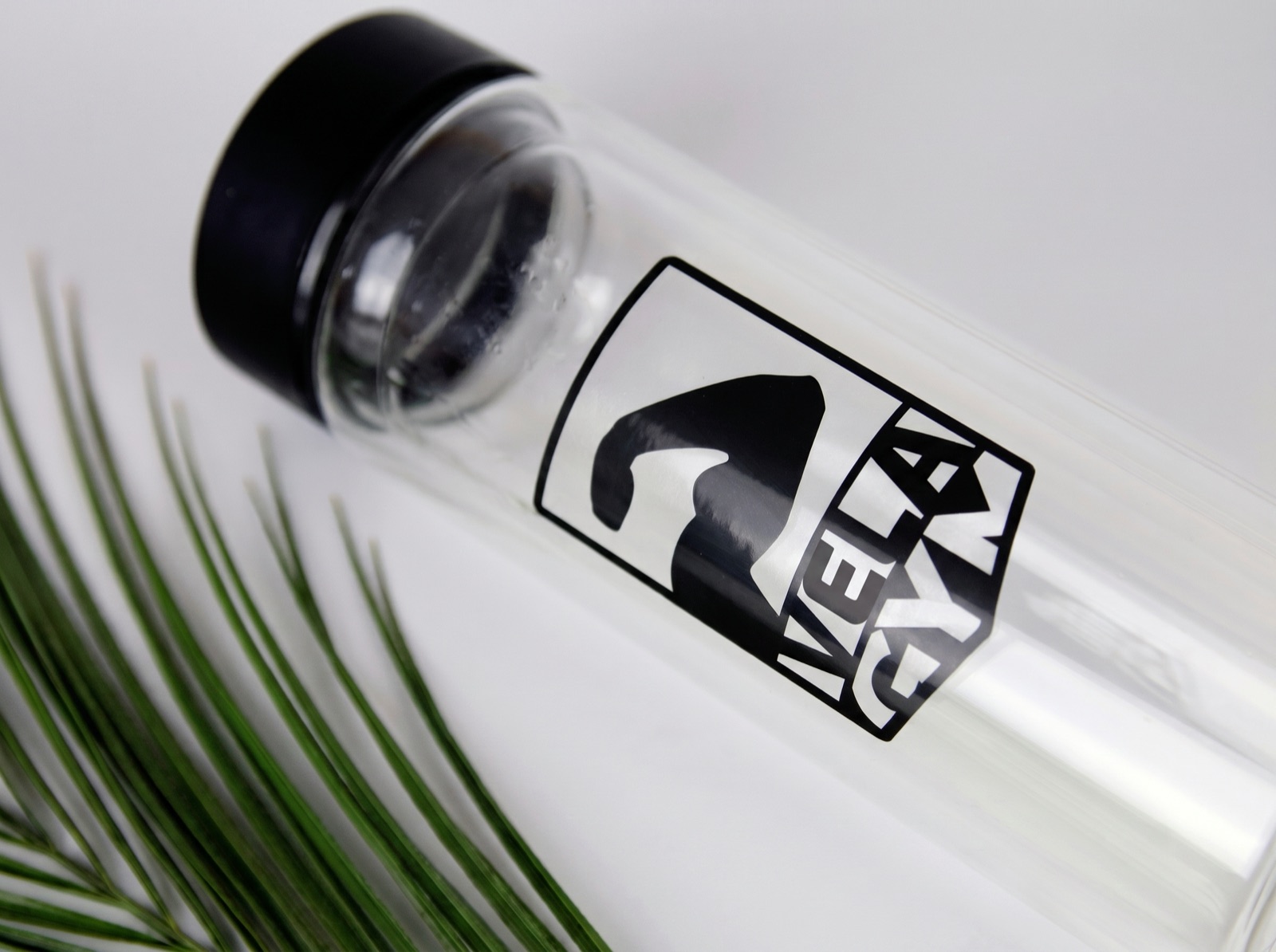
BOPP?
Le film sans étiquette. Transparent, résistant à l'eau, sûr pour le contact alimentaire, utilisé sur les emballages de bouteilles haut de gamme et les emballages cosmétiques dans la plupart des secteurs DTC que vous respectez.
Ce que c'est
BOPP — Polypropylène Biaxialement Orienté — est un film plastique transparent et dimensionnellement stable fabriqué en étirant une feuille de polypropylène dans deux directions perpendiculaires. Le résultat est un frontal d'étiquette qui est solide, brillant, complètement étanche et largement résistant aux produits chimiques, tout en restant suffisamment fin (25–80 µm) pour s'enrouler autour d'une bouteille cylindrique sans se soulever au niveau de la couture.
Vous voyez le BOPP tous les jours sans le nommer. C'est le « look sans étiquette » sur une bouteille de San Pellegrino, le laminage sur un envoi Lululemon, l'emballage de mille barres de collation raffinées. Dans le secteur des étiquettes, le BOPP est le film premium polyvalent — moins cher que le PET, plus durable que le vinyle, plus raffiné que le papier.
Comment il est fabriqué
Les granulés de polypropylène sont fondus, coulés sous forme de feuille épaisse, puis réchauffés et étirés simultanément dans le sens de la machine et dans le sens transversal. Cet étirement biaxial aligne les chaînes polymères et améliore considérablement la résistance à la traction, la transparence et les propriétés barrières.
Le film est ensuite enduit — généralement d'un vernis acrylique ou polyuréthane qui lui confère une imprimabilité avec des encres UV, éco-solvants ou flexographiques. Un adhésif sensible à la pression est laminé à l'arrière, se libérant sur un papier siliconé ou un support PET.
À quoi cela sert-il
Enveloppes pour bouteilles dans le segment premium — cosmétiques, boissons, soins corporels. La haute transparence du BOPP clair crée l'effet « sans étiquette » qui a construit l'identité visuelle des marques DTC depuis environ 2018.
Emballage de collations et d'aliments où l'humidité, les huiles et la réfrigération sont courantes. La conformité du BOPP au contact alimentaire (auto-certifié selon la norme FDA 21 CFR 175.105 pour les étiquettes extérieures) et ses propriétés barrières en font un choix par défaut pour l'emballage alimentaire. Notez que le BOPP supporte la réfrigération mais pas le remplissage à chaud au-dessus de ~80 °C — optez pour le PET dans ce cas.
Lamination sur graphiques imprimés — le BOPP brillant ou mat sur une feuille imprimée en offset est la technique de production standard pour les envois premium, les inserts de magazines et les couvertures de livres en édition limitée.
Compromis
— ce qu'il faut savoir
Le BOPP est non étirable à la chaleur au-delà d'une fenêtre étroite. Si vous avez besoin d'une étiquette qui s'adapte à une surface courbe irrégulière — par exemple, une bouteille de savon liquide avec une épaule prononcée — le PET ou le vinyle est plus tolérant.
Le BOPP a une adhésion plus faible aux plastiques à faible énergie de surface (HDPE, polypropylène non traité) à moins d'être associé au bon adhésif. Spécifiez toujours le matériau lors de la commande.
Le BOPP est pas le moins cher des matériaux de frontal d'étiquette en film ; les étiquettes en papier sont environ 30 à 50 % moins chères pour des quantités comparables. Pour un tirage économique sur Etsy, le papier reste le meilleur choix. Pour une bouteille DTC premium, le BOPP est presque toujours la bonne réponse.
Références croisées
S'accorde bien
avec ces entrées.
Tirage
Découvrez le matériau en personne — pas en impression.
Les échantillons sont expédiés par avion en 3 à 5 jours, gratuitement pour les acheteurs qualifiés. Touchez le matériau avant de vous engager.