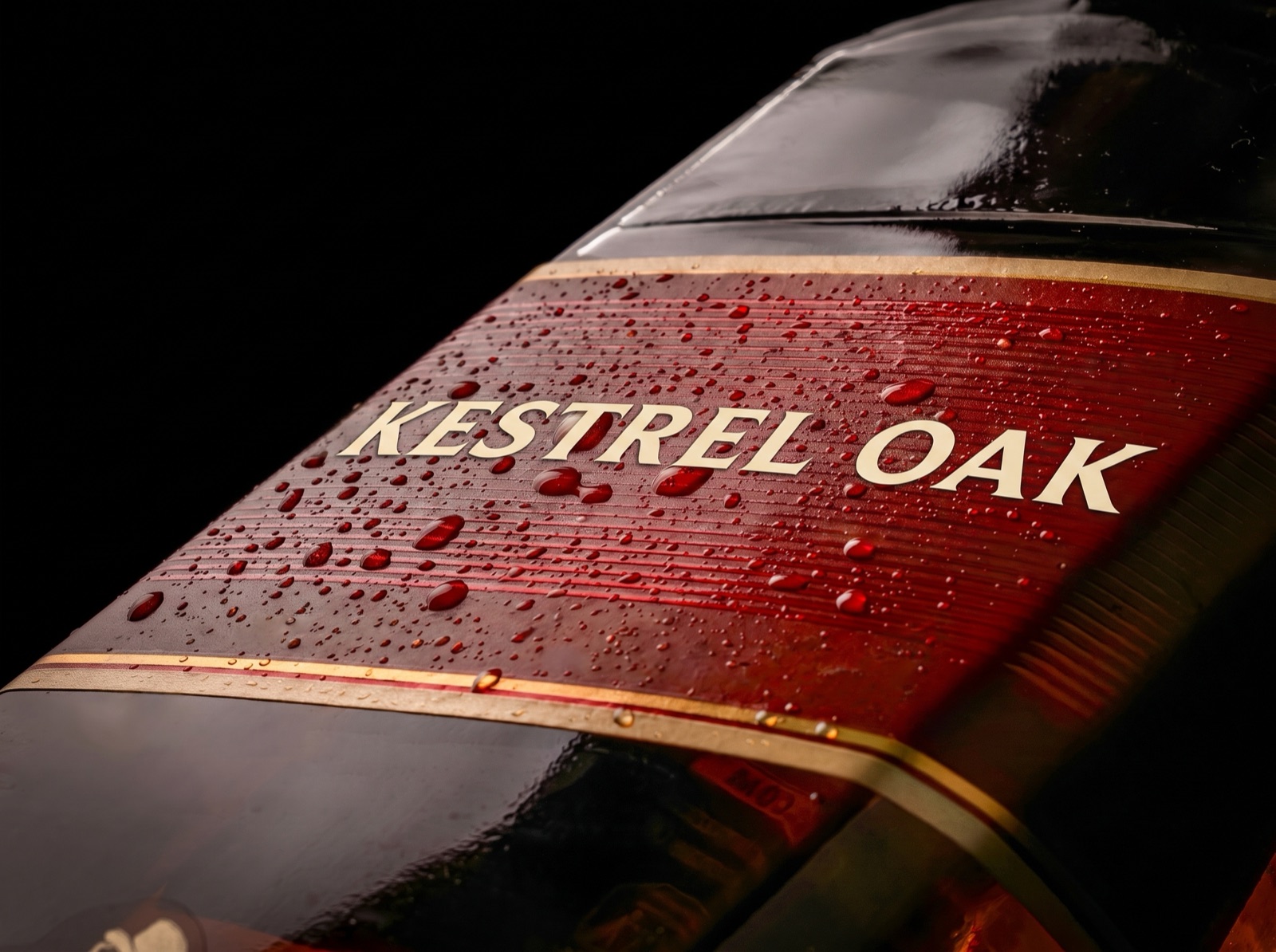
Waterproof vs Water-Resistant?
One word, three different jobs. A splash, a soak, and a season outdoors each demand a different construction — and the adhesive can sink the label even when the face survives.
What it is
“Waterproof” is one of the most over-loaded words a buyer uses, and it covers at least three meaningfully different requirements. Water-resistant stock (typically BOPP film) withstands incidental moisture — splashes, condensation, brief contact — without losing print or adhesion. Waterproof means surviving prolonged submersion. Weatherproof (typically vinyl) resists rain, temperature extremes, and UV outdoors, but is not built for submersion.
Each level maps to a different construction, so the useful first question is not “is it waterproof?” but “what does the label actually meet — a splash, a soak, or the weather?”
Translating the request into a spec
Tear-resistance in a wet environment — the label must not disintegrate when handled with damp hands — can be met with coated paper plus a laminate, common on detergent and laundry products.
Immersion or prolonged wet needs a synthetic film face — PP, BOPP, or PE — because coated paper absorbs water over time and de-laminates.
Outdoor weathering requires a film face plus UV-stable inks, and often a laminate overcoat. Paper is unsuitable outdoors; it disintegrates with moisture.
The adhesive is half the story
A waterproof facestock paired with a non-waterproof adhesive still fails in sustained wet conditions: the adhesive de-laminates from the container even though the face remains intact. Waterproofing is a property of the whole construction — face and adhesive together.
Surface and temperature compound this. Low-surface-energy plastics need an adhesive formulated for them even before water is added; cold or refrigerated wet surfaces need a cold-temperature adhesive. Wet application is self-defeating — an adhesive cannot bond to a surface already carrying condensation.
Trade-offs
— what to know
Match the level, don’t over-buy. A splash environment does not need an immersion-grade construction, and a fully waterproof film costs more than a laminated paper that would have sufficed for damp handling. Over-specifying wastes budget; under-specifying peels labels.
Films behave differently in water beyond staying intact. For recyclable PET-bottle labels, a floating film face (BOPP or PP) plus a wash-off or low-taint adhesive is the compatible construction — a reminder that “waterproof” and “washes off cleanly” are separate, sometimes opposite, requirements.
Cross-References
Pairs well
with these entries.
Press Run
See the material in person — not in print.
Sample packs ship 3–5 day air, free for qualified buyers. Touch the material before you commit.