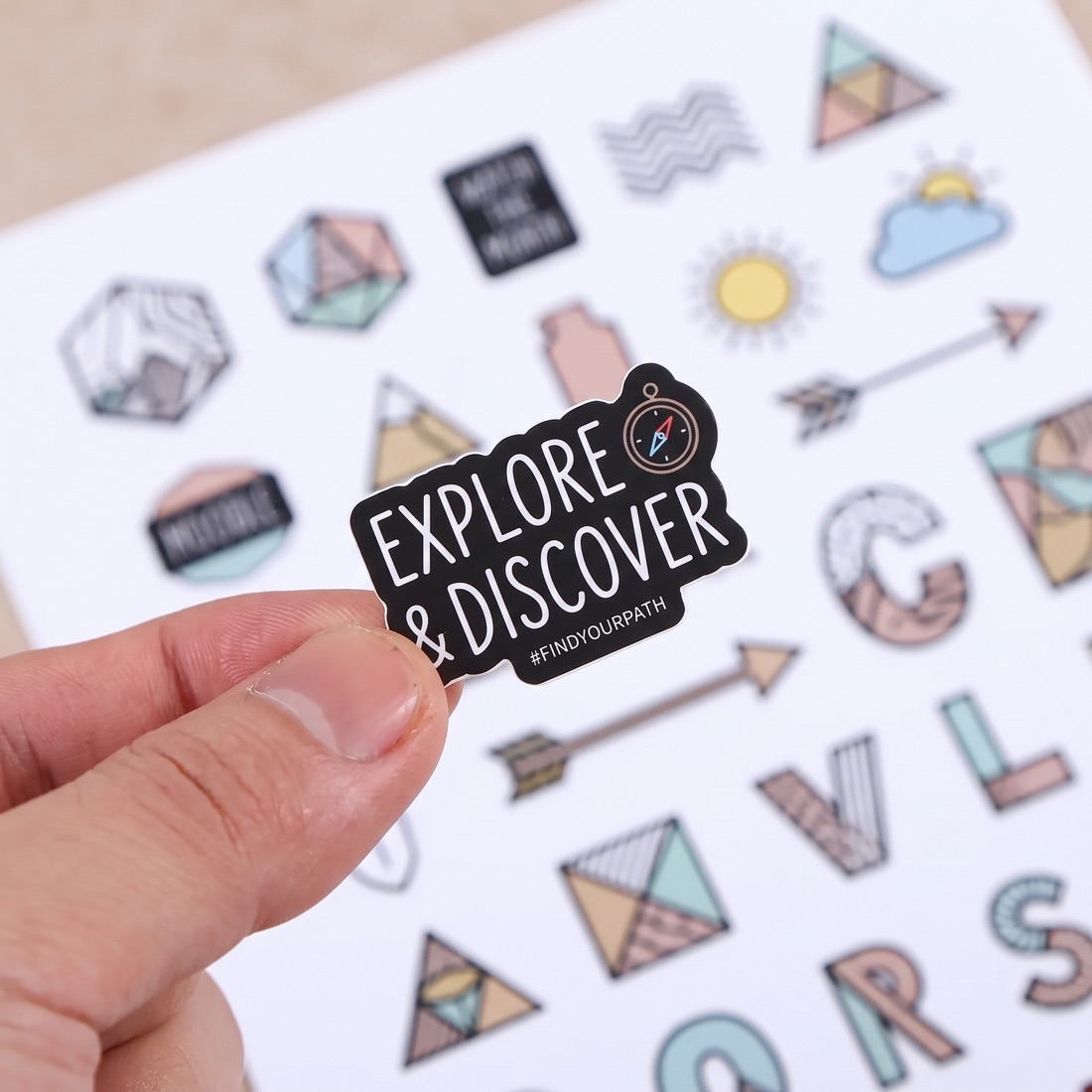
Vinil?
O cavalo de batalha do mundo dos adesivos. Acessível, versátil, adapta-se a curvas compostas, aceita todos os métodos de impressão — e é o substrato por trás de quase toda tiragem da Etsy que vale a pena.
O que é
Vinil — filme de cloreto de polivinila, quase sempre abreviado para vinil PVC no comércio — é o material frontal mais versátil da indústria. Aceita quase qualquer processo de impressão, adapta-se a curvas compostas, está disponível em dezenas de acabamentos e tem um preço que a maioria das pequenas marcas pode realmente pagar.
Se o BOPP é o envoltório que desaparece e o PET é a força bruta, o vinil é o cavalo de batalha. A maioria dos adesivos decorativos no mundo hoje é impressa em alguma forma de vinil.
Como é feito
O vinil é produzido como um filme fundido (mais fino, mais maleável, mais caro) ou um filme calandrado (mais grosso, mais rígido, muito mais barato). Para envelopamentos automotivos de alta qualidade e sinalização, o vinil fundido é a escolha; para adesivos, rótulos de embalagem e gráficos de curto prazo, o vinil calandrado domina.
O filme é revestido com uma camada superior imprimível e um adesivo sensível à pressão, e depois montado em um suporte antiaderente. Laminados opcionais bloqueadores de UV podem estender a vida útil ao ar livre de 6 meses para mais de 5 anos.
Para que é bom
Adesivos decorativos — negócios de adesivos no Etsy e pequenas lojas funcionam quase inteiramente com vinil calandrado. A combinação de baixa tiragem mínima, baixo custo, boa reprodução de cores e durabilidade razoável é imbatível para este segmento.
Sinalização externa — o vinil fundido com um laminado UV é o padrão para adesivos de janela, gráficos de veículos e branding externo de curto a médio prazo.
Acabamentos holográficos e especiais — quase todo vinil holográfico é PVC calandrado com um revestimento prismático depositado. O substrato é importante porque o vinil, ao contrário do papel, mantém o efeito holográfico através da umidade e manuseio.
Curvas compostas — o vinil se adapta a superfícies irregulares (frascos cosméticos com ombros, painéis de veículos) muito melhor do que PET ou BOPP.
Compensações
O vinil é um plástico derivado do petróleo com um perfil de fim de vida ruim. O PVC não é facilmente reciclável na maioria dos fluxos municipais. Marcas com compromissos de sustentabilidade devem considerar alternativas em PE ou materiais frontais de papel.
O vinil tem um limite superior de temperatura (~90 °C) do que o PET (150 °C). Não é adequado para aplicações de processo a quente.
Vinil calandrado barato ficará amarelo sob exposição prolongada à UV sem um laminado. Especifique filme fundido ou adicione um sobrelaminado claro com proteção UV para uso prolongado ao ar livre.
Referências Cruzadas
Combina bem
com estas entradas.
Tiragem
Veja o material pessoalmente — não em impressão.
Pacotes de amostra são enviados em 3–5 dias por via aérea, grátis para compradores qualificados. Toque o material antes de se comprometer.